
High Standards, High Quality
Only the Good, None of the Bad
We went through tens of different formulation iterations to meet our high product and ingredient standards. Identifying the best all-natural substitutes for traditionally chemical ingredients, to ensure that each product experience is healthy for you and the planet.
Each of our ingredients is checked against P65, Cradle to Cradle, the Environmental Working Group and Whole Foods' Banned List.

All-Purpose Cleaner Concentrate
Learn about our ingredients: what each does, where it's derived, how we use it, and the EWG (Environmental Working Group) Skin Deep Score.
EWG Scoring: For cleaning products, EWG's Guide to Healthy Cleaning uses an A–F hazard letter grade (A = lowest concern, F = highest concern). Where a numeric Skin Deep score (1–10) is also available, it is noted. Scores reflect known and suspected hazards linked to the ingredient — not the product itself — and do not account for level of exposure.
WATER (EAU / AQUA)
What is it? Water! It's used in the formulation of virtually every type of cosmetic and personal care product.
Derived from: Water.
How we use it As a diluent, to help disperse other ingredients.
EWG score: 1
DISODIUM COCO-GLUCOSIDE CITRATE
What is it? A surfactant and emulsifier derived from sugar and coconut. It is biodegradable, non-toxic, and exceptionally mild — making it ideal for everyday cleaning without harsh chemical residues.
Derived from: Sugar, corn, and coconuts.
How we use it: As our primary surfactant — the workhorse of this formula. It lifts and removes dirt, grease, and oils from surfaces, while also acting as an emulsifier to keep all the ingredients evenly blended and active.
EWG score: 1
FUNCTIONALIZED ALKYL POLY GLUCOSIDE
What is it? An advanced, next-generation surfactant in the alkyl poly glucoside (APG) family — one of the greenest and most eco-friendly classes of surfactants available. Functionalized APGs are modified versions of standard sugar-based surfactants, engineered to deliver enhanced surface-wetting, soil removal, and rinsing performance while remaining fully plant-derived and biodegradable.
Derived from: Glucose (from corn or other plant starches) and fatty alcohols from coconut or palm kernel oil. Entirely plant-based.
How we use it: As a high-performance co-surfactant that boosts the cleaning power of the formula — improving how quickly and effectively it wets surfaces, penetrates soils, and rinses cleanly away without leaving residue.
EWG score: 1
SODIUM CAPRYLYL SULFONATE
What is it? A mild, short-chain anionic surfactant derived from caprylic acid — a naturally occurring medium-chain fatty acid found in coconut oil. It is highly water-soluble, readily biodegradable, and known for its excellent wetting and soil-penetrating properties at low concentrations.
Derived from: Caprylic acid from coconut oil, processed with sulfonation.
How we use it: As a wetting agent and co-surfactant that helps the formula spread quickly and evenly across surfaces, penetrate dried-on soils and residues, and improve the overall speed and efficiency of the cleaning action.
EWG score: 1–2
SODIUM COCOAMPHOACETATE
What is it? A mild amphoteric (dual-nature) surfactant derived from coconut oil and belonging to the amphoacetate family. It is known for its exceptional gentleness, excellent compatibility with other surfactants, and ability to boost foam and cleaning performance without increasing irritation. It is fully biodegradable and ECOCERT approved.
Derived from: Coconut oil fatty acids.
How we use it: As a co-surfactant that boosts cleaning performance, improves foam quality, and helps reduce the overall irritation potential of the formula — making our cleaner safer for skin contact during use and gentle on surfaces.
EWG score: 1–2
CAPRYLYL / CAPRYL GLUCOSIDE
What is it? A natural, mild, non-ionic surfactant from the alkyl glucoside family — ideal for all foaming and cleansing products. It is highly biodegradable, skin-compatible, and ECOCERT certified.
Derived from: Corn and coconut oil.
How we use it: Caprylyl/Capryl Glucoside helps the formula clean quicker because it is "fast wetting." It also helps to reduce residues on surfaces and evenly deposit our signature scent throughout the formula.
EWG score: 2
SODIUM GLUCONATE
What is it? A white crystalline powder that is the sodium salt of gluconic acid — a compound found naturally in fruits, honey, and wine. It is fully biodegradable and non-toxic.
Derived from: Sugar / carbohydrates (produced by fermentation of glucose).
How we use it: It helps disperse the formula (helps the ingredients move around and remain active). Sodium gluconate also acts as a chelating agent — binding hard water minerals that would otherwise reduce the effectiveness of the surfactants and leave residue on surfaces.
EWG score: 1
DISODIUM GLUTAMATE DIACETATE
What is it? A fully biodegradable chelating agent and the eco-friendly replacement for EDTA (ethylenediamine tetraacetic acid) — a synthetic chelator that is not biodegradable and is found in most conventional household cleaners. It is derived from glutamic acid, a naturally occurring amino acid, and is EU Ecolabel approved and EPA Safer Choice listed.
Derived from: Glutamic acid — a naturally occurring amino acid found abundantly in nature, including in tomatoes, mushrooms, and fermented foods.
How we use it: To soften hard water by binding calcium and magnesium ions — so that the surfactants can do their job effectively regardless of your local water hardness.
EWG score: 1
SODIUM BICARBONATE
What is it? Good old baking soda. Sodium Bicarbonate is a natural disinfectant (effective against certain bacteria and fungi) and sanitizer that works against various microbes while being non-corrosive and completely non-toxic.
Derived from: Naturally occurring mineral deposits (trona ore) or produced from sodium carbonate.
How we use it: For its natural sanitizing and deodorizing properties — helping to clean and freshen surfaces without the need for harsh synthetic disinfectants.
EWG score: 1
POTASSIUM CARBONATE
What is it? A biodegradable, non-toxic white salt used in soaps and eco-friendly cleaners for centuries — it was historically derived from wood ash (potash) and is one of the oldest cleaning agents known.
Derived from: Mineral sources or produced from potassium chloride.
How we use it: As an alkaline builder that adjusts and maintains the optimal pH of our formula — boosting the effectiveness of the surfactants in breaking down grease, oils, and soils on surfaces.
EWG score: 1
CITRIC ACID
What is it? A naturally occurring antioxidant found abundantly in citrus fruits. It is odourless and looks like small, clear crystals — similar to table salt.
Derived from: Citrus fruits (lemons, limes, oranges), or produced by fermentation of sugars.
How we use it: As a chelator and pH adjuster. It is effective at removing soap scum, hard water stains, calcium deposits, lime, and rust — leaving surfaces sparkling clean and residue-free.
EWG score: 1–2
NATURAL FRAGRANCE / ESSENTIAL OIL BLEND
See below for more information on Citrus Oasis and Woodlands, our signature essential oil blends.
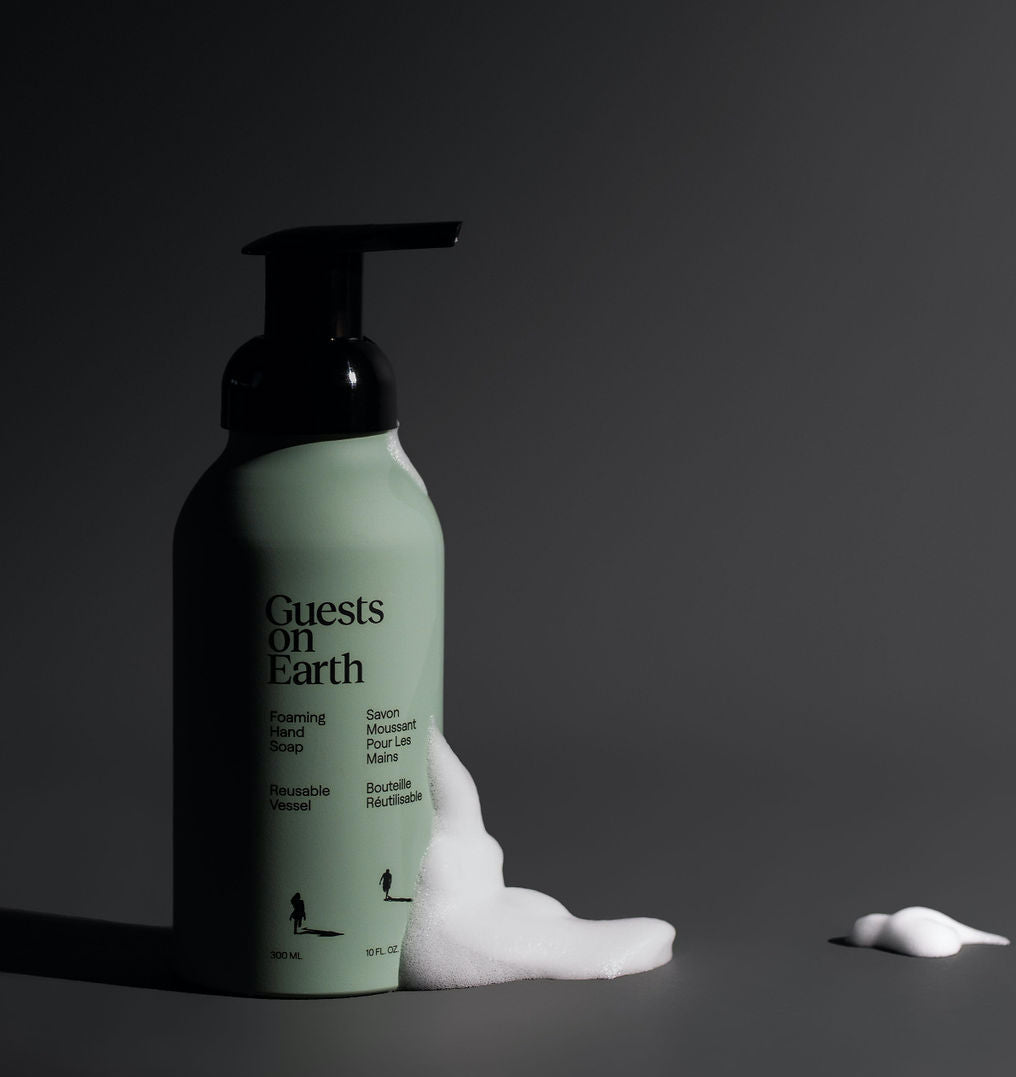
Foaming Hand Soap Concentrate
Learn about our ingredients: what each does, where it's derived, how we use it, and the EWG (Environmental Working Group) Skin Deep Score.
EWG Scoring: For cleaning products, EWG's Guide to Healthy Cleaning uses an A–F hazard letter grade (A = lowest concern, F = highest concern). Where a numeric Skin Deep score (1–10) is also available, it is noted. Scores reflect known and suspected hazards linked to the ingredient — not the product itself — and do not account for level of exposure.
Water (Eau / Aqua)
What is it? Water! It's used in the formulation of virtually every type of cosmetic and personal care product.
Naturally derived from: Water!
How we use it As a diluent, to help disperse other ingredients.
EWG score: 1
SODIUM LAUROYL SARCOSINATE
What is it? A premium natural, amino acid-based detergent known for its exceptional mildness and rich, creamy foam.
Derived from: Coconut oil (lauric acid) and sarcosine — a naturally occurring amino acid found in the human body and in many everyday foods.
How we use it: As a primary foaming agent that cleans and removes soil from hands while being exceptionally gentle — making it ideal for a product used multiple times daily.
EWG score: 1–3
SODIUM METHYL COCOYL TAURATE
What is it? A premium, amino acid-derived surfactant from the taurate family. It produces an exceptionally soft, dense foam and is known for its outstanding skin mildness — even compared to other gentle surfactants. It is biodegradable and widely used in luxury and sensitive skin formulations.
Derived from: Coconut oil fatty acids and taurine — a naturally occurring amino acid found abundantly in the human body.
How we use it: As a secondary surfactant and foam enhancer that contributes to the luxurious, dense lather of our hand soap while keeping the formula gentle and non-stripping on the skin barrier.
EWG score: 1–2
SODIUM COCOYL GLYCINATE
What is it? One of the few detergents that also moisturises — a premium, natural surfactant derived from coconut oil and glycine (the simplest amino acid). It produces a soft, silky lather and leaves skin with a notable after-feel of smoothness.
Derived from: Coconut oil fatty acids and glycine, a naturally occurring amino acid.
How we use it: For its moisturising and skin-softening properties — it cleans gently while simultaneously helping to maintain skin hydration, reducing the dryness associated with frequent handwashing.
EWG score: 1
COCO-BETAINE
What is it? A mild amphoteric (dual-nature) surfactant derived from coconut oil. It functions as both a cleanser and a conditioning agent, and is widely recognised for its ability to boost foam while improving skin tolerance.
Derived from: Coconut oil fatty acids.
How we use it: To improve foam volume and stability, enhance the thickness and feel of our lather, and boost the overall mildness of the formula — making the hand washing experience noticeably more comfortable and skin-friendly.
EWG score: 1–2
CAPRYL GLUCOSIDE
What is it? A natural, mild, non-ionic surfactant from the alkyl glucoside family — ideal for all foaming and cleansing products. It is highly biodegradable and skin-compatible.
Derived from: Corn and coconut oil.
How we use it: To help deliver our luxurious foam texture. Capryl Glucoside is "fast wetting," meaning it helps the formula work quickly and effectively while also helping to reduce any residue and evenly deposit our signature scents.
EWG score: 2
GLYCERIN
What is it? A natural humectant — a water-attracting substance that keeps things moist and helps maintain skin hydration.
Derived from: Coconut or other plant-based oils (a by-product of saponification).
How we use it: To help maintain moisture in the skin barrier during and after handwashing — keeping hands soft and comfortable even with frequent use.
EWG score: 1–2
1,3 PROPANEDIOL
What is it? A premium bio-based humectant and co-solvent. It is superior to propylene glycol — naturally fermented rather than petroleum-derived, non-irritating, and USDA certified bio-based. It is gentle enough for sensitive skin.
Derived from: Corn glucose, via natural fermentation.
How we use it: To add moisture and improve the preservation of the formula, while also enhancing the texture and skin feel of the soap on hands.
EWG score: 2
BUTYROSPERMUM PARKII (SHEA BUTTER)
What is it? A skin-repairing moisturiser extracted from the nut of the African shea tree. It is rich in fatty acids and vitamins, and has been used for centuries for its deeply nourishing, protective properties.
Derived from: Shea tree (Vitellaria paradoxa) nuts.
How we use it: For its skin-smoothing and barrier-repair properties. Shea butter helps to keep skin from drying out after repeated washing, leaving hands feeling noticeably softer and more comfortable.
EWG score: 1
NATURAL FRAGRANCE / ESSENTIAL OIL BLEND
See below for more information on Citrus Oasis and Woodlands, our two essential oil blends.
ALOE BARBADENSIS (ALOE VERA) LEAF EXTRACT
What is it? Aloe barbadensis is a spiky succulent plant abundant in nature, used for medicinal purposes for centuries due to its anti-inflammatory, antimicrobial, antioxidant, humectant, and soothing properties. It is filled with vitamins including B complex, folic acid, and Vitamin C. Due to its high water content (over 99% water), it is an exceptional way to hydrate and rejuvenate skin with natural nutrients.
Derived from: Aloe vera plant leaves.
How we use it: For its moisturising and healing properties — soothing the skin during and after washing, and helping to repair the skin barrier with repeated use.
EWG score: 1–3
INULIN
What is it? A prebiotic naturally occurring in chicory root. It is a soluble plant fibre that has remarkable water-binding and skin-conditioning properties.
Derived from: Chicory root.
How we use it: Inulin acts like a water magnet — binding moisture to the skin to keep it healthy, soft, and hydrated. It also has the added benefit of improving the thickness and quality of our foam.
EWG score: 1
CITRIC ACID
What is it? A naturally occurring antioxidant found abundantly in citrus fruits. It is odourless and looks like small, clear crystals, similar to table salt.
Derived from: Citrus fruits (lemons, limes, oranges), or produced by fermentation of sugars.
How we use it: As a pH adjuster and chelator that maintains the optimal acidity of the formula for both skin compatibility and preservation efficacy.
EWG score: 1–2
CAPRYLHYDROXAMIC ACID
What is it? A premium, natural preservative used in high-end skincare products. It is derived from coconut oil and is considered one of the safest and most effective natural preservatives available — a popular alternative to parabens and formaldehyde-releasing preservatives.
Derived from: Coconut oil (caprylic acid).
How we use it: To prevent bacteria, mould, and fungus from growing in the formula — protecting the integrity and safety of every pump throughout the product's shelf life.
EWG score: 1
GLYCERYL CAPRYLATE
What is it? A naturally derived multifunctional ingredient that acts as both a mild skin conditioner and a gentle, broad-spectrum antimicrobial. It is an ester of glycerin and caprylic acid, fully biodegradable and ECOCERT/COSMOS certified for use in natural and organic formulations.
Derived from: Glycerin (from plant-based oils) and caprylic acid (from coconut or palm kernel oil). Entirely plant-based.
How we use it: As a natural preservative co-agent and skin conditioner that works synergistically with Caprylhydroxamic Acid — maintaining microbial safety at lower overall preservative concentrations, while simultaneously leaving hands feeling soft and moisturised.
EWG score: A · 1 (Skin Deep)
METHYL GLUCOSE DIOLEATE
What is it? A natural thickener and emollient derived from corn-sourced glucose and oleic acid. It helps to protect the skin from moisture loss and contributes a smooth, luxurious feel to formulas.
Derived from: Corn (glucose) and plant-derived oleic acid.
How we use it: To make the foam feel smooth and luxurious on skin, and to help lock in moisture — enhancing the overall skin-conditioning experience of our hand soap.
EWG score: 1
LINOLEIC ACID (VITAMIN F)
What is it? An essential omega-6 fatty acid that the body cannot produce on its own and must obtain externally. It plays a critical role in maintaining the skin's natural barrier and is known for its ability to heal, soothe, and strengthen the skin.
Derived from: Flax oil or sunflower oil.
How we use it: To help heal and strengthen the skin barrier — particularly important for hands exposed to frequent washing. Vitamin F helps to replenish lipids lost during cleansing and keeps skin looking and feeling healthy.
EWG score: 1
ASCORBYL PALMITATE (VITAMIN C)
What is it? An oil-soluble, stable form of Vitamin C. It is a powerful antioxidant that can penetrate the skin and deliver Vitamin C's well-known skin-brightening and collagen-stimulating benefits.
Derived from: Coconuts and citrus fruit.
How we use it: As an antioxidant for the skin that helps maintain a more youthful appearance and feel. It also helps stabilise the formula by protecting other ingredients from oxidation.
EWG score: 2
NATURAL TOCOPHEROL (VITAMIN E)
What is it? Natural Vitamin E. Tocopherol is one of the most common antioxidants in nature, found in many plant-based oils. The natural form (d-alpha-tocopherol) is significantly more bioavailable and effective than the synthetic version.
Derived from: Vegetable oil — typically sunflower, safflower, or soybean oil.
How we use it: To repair the skin and leave it feeling moisturised and more youthful, while also protecting the formula's other natural ingredients from oxidative degradation.
EWG score: 1–2
DEAD SEA SALT
What is it? Salt harvested from the Dead Sea — the lowest point on Earth and one of the world's saltiest bodies of water. Dead Sea salt has a unique mineral composition, rich in magnesium, potassium, calcium, and bromide, which distinguishes it from regular table salt.
Derived from: The Dead Sea.
How we use it: Dead Sea salt helps hydrate the skin and gently exfoliate dead skin cells, allowing new cells to regenerate. Its exceptional mineral content nourishes the skin and helps maintain its natural moisture balance with every wash.
EWG score: 1

Dish Soap
Learn about our ingredients: what each does, where it's derived, how we use it, and the EWG (Environmental Working Group) Skin Deep Score.
EWG Scoring: For cleaning products, EWG's Guide to Healthy Cleaning uses an A–F hazard letter grade (A = lowest concern, F = highest concern). Where a numeric Skin Deep score (1–10) is also available, it is noted. Scores reflect known and suspected hazards linked to the ingredient — not the product itself — and do not account for level of exposure.
DISODIUM GLUTAMATE DIACETATE
What is it? A fully biodegradable chelating agent and the eco-friendly replacement for EDTA (ethylenediamine tetraacetic acid) — a synthetic chelator that is not biodegradable and is found in most conventional household cleaners. Disodium Glutamate Diacetate is derived from glutamic acid, an amino acid that occurs abundantly in nature. It is EU Ecolabel approved, EPA Safer Choice listed, and certified by ECOCERT for use in natural formulations.
Derived from: Glutamic acid — a naturally occurring amino acid found in many foods including tomatoes, mushrooms, and fermented products.
How we use it: To soften hard water by binding to calcium and magnesium ions, preventing them from interfering with the surfactants and reducing their cleaning effectiveness. This means our formula performs consistently well regardless of local water hardness, while leaving no residue on dishes or surfaces.
EWG score: A · 1 (Skin Deep)
SODIUM C14-C16 OLEFIN SULFONATE
What is it? A high-performance anionic surfactant made from natural plant-derived alpha olefins. It is one of the mildest sulfonate surfactants available, producing a rich, stable lather without the harsh profile of traditional sulfates like SLS. It is readily biodegradable and EPA Safer Choice listed.
Derived from: Plant-derived alpha olefins (C14–C16 chain length), processed with sulfonation.
How we use it: As a primary surfactant and foaming agent — the powerhouse of our dish soap formula. It effectively cuts through grease and food residue while remaining gentle enough for repeated skin contact.
EWG score: C (EWG Cleaners) · 1 (Skin Deep) · EPA Safer Choice listed
COCO-GLUCOSIDE
What is it? A natural, non-ionic surfactant from the alkyl glucoside family. It is 100% plant-derived, fully biodegradable, and certified by ECOCERT/COSMOS for use in natural and organic products. It is exceptionally gentle and suitable even for baby care formulations.
Derived from: Coconut oil fatty alcohols and glucose derived from corn or other plant starches.
How we use it: As a gentle co-surfactant that supports cleaning performance, improves foam texture, and contributes to the overall mildness of the formula — making it friendlier for frequent use.
EWG score: A · 1 (Skin Deep)
SODIUM LAUROYL SARCOSINATE
What is it? A premium, amino acid-derived anionic surfactant known for its exceptional mildness and rich foam compared to traditional sulfate detergents. It is biodegradable and EPA Safer Choice listed. EWG's Cleaners Guide rates it C at the ingredient level — however, this rating reflects considerations at full concentration, not at the low levels used in finished formulations, where it is widely recognized as safe and gentle.
Derived from: Coconut oil (lauric acid) and sarcosine — a naturally occurring amino acid found in the human body and in many foods including egg yolks, turkey, and legumes.
How we use it: As a foaming and cleansing co-surfactant that effectively removes grease and food soils from dishes, while contributing to the overall mildness and skin-friendliness of the formula during repeated hand contact.
EWG score: C (EWG Cleaners) · 1–3 (Skin Deep)
SORBITAN OLEATE DECYL GLUCOSIDE CROSSPOLYMER
What is it? A next-generation, 100% natural, multifunctional ingredient that combines the properties of a surfactant, emulsifier, and skin conditioner in a single molecule. It is created by cross-linking sorbitan oleate (derived from sorbitol and olive oil) with decyl glucoside (a sugar-based surfactant). It is ECOCERT and COSMOS certified and fully biodegradable.
Derived from: Sorbitol (from corn or wheat starch), olive oil fatty acids, and glucose (from corn). Entirely plant-based.
How we use it: As a naturally derived emulsifier and co-cleanser that helps stabilize the formula, improve the feel and spreadability of the soap on skin, and boost overall cleaning efficiency — particularly for oils and greasy residues.
EWG score: A (not individually listed in EWG database; constituent ingredients rate A)
Water (Eau / Aqua)
What is it? Water that has been processed to remove impurities, contaminants, and minerals. It is the foundation of virtually every liquid personal care and cleaning product.
Derived from: Water, purified through filtration and/or reverse osmosis.
How we use it: As the primary carrier and diluent that allows all other ingredients to be evenly distributed throughout the formula and delivered effectively during use.
EWG score: A · 1 (Skin Deep)
COCAMIDOPROPYL BETAINE
What is it? A mild amphoteric (dual-nature) surfactant derived from coconut oil. It is widely used in gentle and baby-care formulations for its excellent skin compatibility and foam-enhancing properties. EWG notes it requires adequate substantiation for EWG Verified products, primarily due to manufacturing process considerations at the ingredient level — not the finished product.
Derived from: Coconut oil fatty acids.
How we use it: As a co-surfactant and foam booster that enhances lather richness, improves the feel of the formula on skin, and helps moderate the overall mildness of the cleaning system.
EWG score: C (EWG Cleaners) · 1–2 (Skin Deep)
LAURAMINE OXIDE
What is it? A mild amphoteric surfactant and foam booster derived from coconut. It behaves as a non-ionic surfactant at neutral pH and as a cationic surfactant at lower pH, making it highly versatile. It is commonly found in dish soaps and baby care products for its excellent cleaning and foam-stabilizing properties. EWG notes it requires adequate substantiation for EWG Verified products.
Derived from: Lauric acid from coconut oil.
How we use it: To boost and stabilize foam, enhance the feel of the lather on hands, and improve the grease-cutting performance of the formula — particularly in harder water conditions.
EWG score: C (EWG Cleaners) · 1–2 (Skin Deep)
COCOAMIDE DIPA
What is it? A mild, coconut-derived fatty acid diethanolamide used as a foam booster and viscosity modifier in cleaning and personal care formulations. It is effective at enhancing lather and improving the overall texture of liquid cleansers. It is biodegradable and widely used in gentle, eco-conscious formulations.
Derived from: Coconut oil fatty acids and diisopropanolamine (DIPA).
How we use it: As a foam stabilizer and mild co-cleanser that helps boost and maintain lather volume, improves the thickness and feel of the formula, and enhances the grease-cutting performance of the surfactant system.
EWG score: A (EWG Cleaners) · 1 (Skin Deep)
1,3 PROPANEDIOL
What is it? A premium, bio-based humectant and solvent. It is a superior alternative to propylene glycol — it is naturally fermented rather than petroleum-derived, non-irritating, and considered safe for sensitive skin. It is USDA certified bio-based.
Derived from: Corn glucose, via natural fermentation (produced by DuPont's Susterra® or equivalent bio-based process).
How we use it: As a humectant and co-solvent that helps keep the formula stable, improves the texture and feel of the soap on skin, adds a touch of moisture during use, and helps solubilize other ingredients.
EWG score: A · 1–2 (Skin Deep)
SODIUM GLUCONATE
What is it? A white crystalline powder that is the sodium salt of gluconic acid — a naturally occurring compound found in fruits, honey, and wine. It is fully biodegradable and non-toxic, with an excellent environmental profile.
Derived from: Sugar / carbohydrates (produced by fermentation of glucose).
How we use it: As a secondary chelating agent and dispersant that works alongside MGDA to keep hard water minerals in solution, reduce residue on dishes, and help maintain the formula's stability and cleaning efficiency.
EWG score: A · 1 (Skin Deep)
SODIUM CHLORIDE
What is it? Table salt. One of the most abundant and well-studied minerals on Earth.
Derived from: Sea salt / mineral deposits (mined or evaporated from seawater).
How we use it: As a natural viscosity modifier — small adjustments to its concentration allow us to fine-tune the thickness of the dish soap to ensure ideal dispensing and effective lather, without the need for synthetic thickeners.
EWG score: A · 1 (Skin Deep)
NATURAL FRAGRANCE / ESSENTIAL OIL BLEND
See below for Details about Citrus Oasis and Woodlands, our essential oil blends.
PHENOXYETHANOL
What is it? A preservative used at low concentrations to prevent the growth of bacteria, mould, and yeast. It is a widely accepted, paraben-free preservative approved in natural and certified organic products at safe usage levels. EWG's Cleaners Guide rates it C at the ingredient level — primarily based on potential concerns at higher concentrations than those used in finished products.
Derived from: Can be found naturally in green tea; the cosmetic-grade version used in our formula is nature-identical and produced to pharmaceutical standards.
How we use it: At a low, effective concentration to protect the formula from microbial contamination and maintain product safety throughout its shelf life — ensuring every drop of soap is as safe on the last use as the first.
EWG score: C (EWG Cleaners) · 3–4 (Skin Deep — at typical use concentrations)
NATURAL TOCOPHEROL (VITAMIN E)
What is it? Natural Vitamin E. Tocopherol is one of the most abundant and well-studied antioxidants in nature, found in many plant-based oils. The natural form (d-alpha-tocopherol) is significantly more bioavailable and effective than the synthetic version.
Derived from: Vegetable oils — typically sunflower, safflower, or soybean oil.
How we use it: As a natural antioxidant that protects the formula's other natural ingredients from oxidative degradation, extending shelf life — and as a bonus, provides skin-nourishing, moisturising benefits on contact with hands.
EWG score: A · 1–2 (Skin Deep)
CITRIC ACID
What is it? A naturally occurring organic acid found abundantly in citrus fruits. It is odourless, looks like small clear crystals, and has a broad range of uses in food, cosmetics, and cleaning products.
Derived from: Citrus fruits (lemons, limes, oranges) or produced by fermentation of sugars using naturally occurring microorganisms.
How we use it: As a pH adjuster and mild chelating agent that helps maintain the optimal pH of the formula for both skin compatibility and cleaning performance — and helps prevent mineral scale from redepositing on dishes and surfaces.
EWG score: A · 1–2 (Skin Deep)
POTASSIUM SORBATE
What is it? The potassium salt of sorbic acid — a naturally occurring organic acid originally found in the berries of the mountain ash (rowan) tree. It is one of the most widely used and well-accepted natural preservatives in food and cosmetic products worldwide, approved by organic certifiers including ECOCERT and COSMOS.
Derived from: Sorbic acid, naturally occurring in rowan berries; commercially produced via fermentation or from naturally derived precursors.
How we use it: As a gentle, broad-spectrum preservative that works synergistically with Phenoxyethanol to inhibit the growth of yeast, mould, and bacteria — allowing us to use lower concentrations of each preservative individually, improving overall formula safety.
EWG score: A · 1 (Skin Deep)
GLYCERYL CAPRYLATE
What is it? A naturally derived multifunctional ingredient that acts as both a skin conditioning agent and a mild, broad-spectrum antimicrobial. It is an ester of glycerin and caprylic acid — a medium-chain fatty acid naturally abundant in coconut and palm kernel oil. It is fully biodegradable, ECOCERT and COSMOS certified, and frequently used in natural and organic certified formulations as a gentle preservative booster.
Derived from: Glycerin (from plant-based oils) and caprylic acid (from coconut or palm kernel oil). Entirely plant-based.
How we use it: As a natural preservative co-agent and skin conditioner that works synergistically with other preservatives in our formula — allowing us to maintain microbial safety at lower overall preservative concentrations, while simultaneously leaving hands feeling soft and moisturised after washing.
EWG score: A · 1 (Skin Deep)

Laundry Detergent
Learn about our ingredients: what each does, where it's derived, how we use it, and the EWG (Environmental Working Group) Skin Deep Score.
EWG Scoring: For cleaning products, EWG's Guide to Healthy Cleaning uses an A–F hazard letter grade (A = lowest concern, F = highest concern). Where a numeric Skin Deep score (1–10) is also available, it is noted. Scores reflect known and suspected hazards linked to the ingredient — not the product itself — and do not account for level of exposure.
LAURYL GLUCOSIDE
What is it? A natural, plant-derived non-ionic surfactant from the alkyl glucoside family. It is readily biodegradable, non-toxic, and recognised as one of the gentlest and most eco-friendly cleansing agents available — commonly found in certified natural and organic products.
Derived from: Coconut oil and corn or sugar-derived glucose.
How we use it: As a primary surfactant to lift and remove dirt, oils, and soils from fabrics — effectively cleaning without harsh chemicals or residues that could irritate skin or damage delicate fibres.
EWG score: B (EWG Cleaners) · 1–2 (Skin Deep)
WATER / AQUA / EAU
What is it? Water is the universal solvent and the base of virtually every liquid cleaning formulation.
Derived from: Water.
How we use it: As the primary carrier and diluent that allows all other active ingredients to be evenly distributed throughout the formula and delivered effectively to fabrics during the wash cycle.
EWG score: 1
SODIUM METHYL 2-SULFOLAURATE (AND) DISODIUM 2-SULFOLAURATE
What is it? A paired system of anionic methyl ester sulfonates (MES) derived from renewable plant fatty acids. These are among the most biodegradable and eco-friendly surfactants used in modern laundry formulations, performing exceptionally well in cold water and hard water conditions.
Derived from: Coconut or palm kernel oil fatty acids, processed with sulfonation from renewable sources.
How we use it: As a highly effective cleaning and foaming surfactant duo that removes grease, oils, and soils from fabrics — delivering strong cleaning performance even at lower wash temperatures, which saves energy and is gentler on clothes.
EWG score: B–C (EWG Cleaners) · 1–2 (Skin Deep)
SODIUM COCOAMPHOPROPIONATE
What is it? A mild amphoteric (dual-nature) surfactant derived from coconut oil. It is known for being exceptionally gentle while boosting the cleaning performance of other surfactants in the formula. It is fully biodegradable and ECOCERT approved.
Derived from: Coconut oil fatty acids.
How we use it: As a co-surfactant that enhances overall cleaning performance, improves foam quality during the wash cycle, and helps reduce skin irritation potential — making our detergent gentler on hands during dosing and on skin for those with sensitivities to laundry products.
EWG score: B (EWG Cleaners) · 1–2 (Skin Deep)
GLYCERIN
What is it? A natural humectant — a water-attracting substance that helps keep things moist and assists in dissolving and stabilising other ingredients in the formula.
Derived from: Coconut or other plant-based oils, as a by-product of saponification.
How we use it: As a solvent and formula stabiliser that keeps the detergent uniform and consistent — and provides a mild skin-conditioning benefit on contact during handling and dosing.
EWG score: 1–2
GLYCOLIPIDS
What is it? A broad class of naturally occurring molecules made up of a sugar unit bonded to a fatty acid. Many glycolipids used in cleaning products are produced through fermentation by beneficial microorganisms, making them highly biodegradable with a minimal environmental footprint.
Derived from: Plant-based sugars and lipids, often produced through natural fermentation (e.g., sophorolipids or rhamnolipids).
How we use it: As a bio-based, naturally derived surfactant that boosts cleaning efficiency and helps break down greasy soils and body oils embedded in fabric fibres — with outstanding environmental credentials.
EWG score: A (EWG Cleaners) · 1 (Skin Deep)
SODIUM GLUCONATE
What is it? A white crystalline powder that is the sodium salt of gluconic acid — a naturally occurring compound found in fruits, honey, and wine. It is fully biodegradable, non-toxic, and widely used in eco-friendly cleaning formulations.
Derived from: Sugar / carbohydrates (produced by fermentation of glucose).
How we use it: As a chelating builder that sequesters hard water minerals (calcium and magnesium), allowing the surfactants to work at full effectiveness — and reducing detergent residue on fabrics and in the washing machine.
EWG score: A (EWG Cleaners) · 1 (Skin Deep)
SODIUM CITRATE
What is it? The sodium salt of citric acid — a naturally derived, fully biodegradable compound with chelating and pH-buffering properties. It is widely used in eco-friendly cleaning and food products worldwide.
Derived from: Citric acid fermented from sugars (often corn or sugarcane).
How we use it: As a pH buffer and chelating agent that softens hard water, prevents mineral deposits from forming on fabrics and inside the washing machine, and helps the overall formula perform consistently regardless of water hardness.
EWG score: A · 1 (Skin Deep)
POTASSIUM CARBONATE
What is it? A biodegradable, non-toxic white salt used in soaps and eco-friendly cleaners for centuries — historically derived from wood ash (potash). It is one of the oldest cleaning agents known.
Derived from: Mineral sources or produced from potassium chloride.
How we use it: As an alkaline builder that adjusts and maintains the optimal pH of the formula — boosting the effectiveness of the surfactants in breaking down soils, stains, and body oils from fabric fibres.
EWG score: A · 1 (Skin Deep)
FRAGRANCE / PARFUM* (Unscented version does not have fragrance added)
See below for details about our Green Hinoki, which is a synthetic blend that meets IFRA standards.
POLYGLYCEROL ESTERS
What is it? Non-ionic emulsifiers made by combining polyglycerol (derived from glycerin) with plant-based fatty acids. They are biodegradable, gentle, and widely regarded as one of the safest categories of emulsifiers available — used in both food and cleaning applications.
Derived from: Plant-based glycerin and vegetable fatty acids (e.g., from coconut or sunflower oil).
How we use it: As an emulsifier that keeps the formula stable and homogeneous — ensuring all ingredients remain evenly blended and consistently effective throughout the product's shelf life and across different water temperatures.
EWG score: A · 1 (Skin Deep)
MODIFIED POLYSACCHARIDE POLYMER
What is it? A plant-derived, biodegradable polymer made of linked sugar units that has been modified to enhance its performance in laundry applications. Polysaccharides are the same class of natural molecules as starch and cellulose.
Derived from: Plant sources such as corn, tapioca, or other starch-rich crops.
How we use it: As an anti-redeposition agent — it coats fabric fibres during the wash to prevent loosened soils and dyes from re-settling back onto clothes. The result is fabrics that come out cleaner, brighter, and with better colour retention wash after wash.
EWG score: A · 1 (Skin Deep)
SODIUM POLYITACONATE
What is it? A biodegradable polymer derived from itaconic acid — a naturally occurring organic acid produced via the fermentation of carbohydrates. It is considered a "green chemistry" ingredient and a sustainable alternative to traditional synthetic builders like polyacrylates.
Derived from: Itaconic acid, fermented from sugars (often corn-derived).
How we use it: As a scale-inhibiting builder and dispersant that prevents hard water minerals from depositing on fabrics and inside the washing machine — improving cleaning efficiency, protecting the machine, and maintaining fabric appearance over time.
EWG score: A · 1 (Skin Deep)
GLYCEROL CAPRATE
What is it? A monoester of glycerin and capric acid — a naturally occurring medium-chain fatty acid found in coconut oil. It functions as a mild, non-ionic surfactant with some inherent antimicrobial properties, and is fully biodegradable.
Derived from: Coconut or palm kernel oil (capric acid) and plant-derived glycerin.
How we use it: As a gentle co-surfactant and emulsifier that helps solubilise and remove oily soils from fabrics — while contributing to the formula's overall mildness and stability.
EWG score: A · 1 (Skin Deep)
MAGNESIUM CHLORIDE
What is it? A naturally occurring mineral salt found abundantly in seawater and salt lakes. It is safe, non-toxic, and widely used in food, pharmaceutical, and personal care applications.
Derived from: Seawater or natural brine deposits (mineral extraction).
How we use it: As a viscosity modifier and electrolyte that fine-tunes the texture and flow of the detergent — ensuring it dispenses properly, mixes evenly in the wash cycle, and rinses cleanly from fabrics without residue.
EWG score: A · 1 (Skin Deep)
CELLULASE ENZYME
What is it? A naturally occurring biological enzyme that breaks down cellulose — the main structural component of plant fibres like cotton. In laundry, it works specifically on cotton and cotton-blend fabrics to remove surface fuzz and rejuvenate fibres.
Derived from: Produced through the controlled fermentation of naturally occurring microorganisms (fungi or bacteria).
How we use it: To brighten fabric colours, remove pilling and surface fuzz from cotton fibres, and help release soils trapped within fabric structures — giving clothes a refreshed, like-new appearance with every wash.
EWG score: A · 1 (Skin Deep)
ALPHA-CELLULASE ENZYME
What is it? A specific type of cellulase enzyme with enhanced activity at the ends of cellulose chains. It works synergistically with standard cellulase to maximise fibre rejuvenation and soil removal from cotton fabrics.
Derived from: Produced through controlled fermentation of naturally occurring microorganisms.
How we use it: To complement the standard cellulase in our formula — boosting its effectiveness at brightening fabrics and removing cellulose-bound soils more efficiently, particularly in shorter or cooler wash cycles.
EWG score: A · 1 (Skin Deep)
PROTEASE ENZYME
What is it? A naturally produced biological enzyme that breaks down proteins. It is one of the most important and widely used enzymes in modern laundry detergent formulations, and is produced naturally by the human body as part of digestion.
Derived from: Produced through the fermentation of naturally occurring bacteria (e.g., Bacillus species).
How we use it: To effectively remove protein-based stains — such as blood, grass, egg, sweat, and food — breaking them down at the molecular level so they wash away cleanly, even at lower temperatures.
EWG score: A · 1 (Skin Deep)
ALPHA-AMYLASE ENZYME
What is it? A naturally occurring enzyme that breaks down starch molecules into smaller, water-soluble fragments. The human body naturally produces amylase as part of the digestive process.
Derived from: Produced through the fermentation of naturally occurring bacteria (e.g., Bacillus species).
How we use it: To remove starch-based stains — such as pasta, rice, bread, gravy, and other carbohydrate-rich foods — converting them into smaller molecules that rinse away completely and leave no residue in the fabric.
EWG score: A · 1 (Skin Deep)
MANNANASE ENZYME
What is it? An enzyme that breaks down mannans — a group of plant-based polysaccharides commonly found as thickeners in many food products, such as guar gum and locust bean gum.
Derived from: Produced through the fermentation of naturally occurring bacteria or fungi.
How we use it: To remove invisible mannan-based soils left behind by food products containing guar gum or similar thickeners. These residues are not visible but can trap other stains and make fabrics appear dull over time — mannanase breaks them down completely.
EWG score: A · 1 (Skin Deep)
LIPASE ENZYME
What is it? A naturally occurring biological enzyme that breaks down fats and oils (lipids). Lipase is produced naturally by the pancreas as part of the human digestive process, and is one of the most effective tools for removing fat-based stains from fabric.
Derived from: Produced through the fermentation of naturally occurring microorganisms.
How we use it: To remove oil and fat-based stains — such as cooking oil, butter, grease, lip balm, and body oils — by breaking the lipid molecules apart so they release from fabric fibres and rinse away cleanly in the wash.
EWG score: A · 1 (Skin Deep)

Available in All-Purpose Cleaner, Foaming Hand Soap and Dish Soap
Citrus Oasis
We worked with expert perfumers to develop category-defying fragrances.
Citrus Oasis was developed to transport you to a spa in a desert oasis.
Triethyl Citrate
What is it: Triethyl Citrate (TEC) is a versatile solvent for oily products, crystals, powders and resins. It is a modified natural organic ingredient having 100 % renewable carbon source. It is also eco friendly, biodegradable and non-toxic.
Derived from: Citric acid.
Why we use it: To help the essential oils blend together. TEC is a safe replacement for toxic Phthalates.
EWG Score: 1
Citrus Aurantium Dulcis (Orange) Terpenes Oil
What it is: A refreshing, mood enhancing oil extracted from orange peel.
Derived from: Orange Peel.
Why we use it: Orange oil elevates mood as it helps to bring about a sense of calm.
EWG score: 5-6
Citrus Reticulata (Tangerine) Leaf Oil
What it is: A refreshing and rejuvenating essential oil extracted from tangerine peel.
Derived from: Tangerine Peel.
Why we use it: For its refreshing and rejuvenating characteristics.
EWG score: 4-7
Mentha Piperita (Peppermint) Oil
What it is: A cooling essential oil.
Derived from: Peppermint plant leaves.
Why we use it: For its refreshing properties.
EWG score: 5
Cedrus Atlantica (Cedarwood) Bark Oil
What it is: An essential oil with a woody, sweet scent.
Derived from: Bark and wood of cedar trees.
Why we use it: For its grounding and calming properties, we use it as a base note to balance the brighter, more refreshing top notes.
EWG score: 4
Rosmarinus Officinalis (Rosemary) Leaf Oil
What it is: An essential oil with a fresh, herbal scent.
Derived from: Leaves, flowers, buds of rosemary.
Why we use it: For its rejuvenating scent.
EWG score: 1
Foeniculum Vulgare Dulce (Fennel) Oil
What is it: An earthy, anise-like aroma that is energizing, vitalizing, and balancing.
Derived from: Fennel seeds.
Why we use it: For its soothing, balancing properties.
EWG score: 1
Menthol
What is it: A fresh, herbal scent.
Derived from: Peppermint leaves.
Why we use it: For its cooling, relaxing properties.
EWG score: 3
Lavandula Angustifolia (Lavender) Oil
What is it: A relaxing scent that promotes serenity.
Derived from: Lavender leaves / flowers, buds.
Why we use it: For its calming, stress relieving properties.
EWG score: 2
d-Limonene
What is it: D-Limonene, also known as Citrus Terpenes, is the main chemical constituent found in the cold-pressed peel oils that can be derived from all edible citrus fruits, namely oranges, lemons, and limes. After the first pressing of the peels, it is obtained from the resultant oil through the process of distillation. It is one of the most common terpenes in nature.
Derived from: Citrus rinds.
Why we use it: For its light, pleasantly dry, and refreshingly citrusy scent.
EWG score: 4
Linalool
What is it: Linalool is a floral and spicy terpene alcohol. It is found in over 200 plants such as citrus fruits and lavender.
Naturally derived from: Plants
Why we use it: For its soothing effects.
EWG score: 3

Available in All-Purpose Cleaner, Foaming Hand Soap and Dish Soap
Woodlands
We worked with expert perfumers to deveop category-defying fragrances.
Woodlands was designed to make you feel like you're talking a calming, refreshing walk through the pines.
Triethyl Citrate
What is it: Triethyl Citrate (TEC) is a versatile solvent for oily products, crystals, powders and resins. It is a modified natural organic ingredient having 100 % renewable carbon source. It is also eco friendly, biodegradable and non-toxic.
Derived from: Citric acid.
Why we use it: To help the essential oils blend together. TEC is a safe replacement for toxic Phthalates.
EWG Score: 1
Cedrus Atlantica (Cedarwood) Bark Oil
What is it: A warm, woody scent.
Naturally derived from: Cedarwood bark
Why we use it: It promotes a relaxing environment and eases tension.
EWG score: 4
Juniperus Virginiana (Virginia Red Cedar) Oil
What is it: It has a woody, balsamic scent
Derived from: Cedar bark.
Why we use it: It’s grounding, balancing and creates a calming atmosphere.
EWG score: 4
Lavandula Hybrida (Lavandin) Oil
What is it: Lavandin is a hybrid plant produced via the cross-pollination of the Lavender varieties and has a clean, sharp and refreshing scent.
Derived from: Lavandin stalks and flowers
Why we use it: For its bright and intense aroma, with a fragrance body that is more herbaceous and camphoraceous but still has light, underlying touches of Lavender's sweet-floral scent.
EWG score: 2
Amyris Balsamifera (Amyris) Bark Oil
What is it: A refreshing aroma that helps to relieve stress.
Derived from: Bark of the Amyris tree.
Why we use it: It’s often used as a "fixative," to extend the fragrant life of a blend.
EWG score: 1
Eugenia Caryophyllus (Clove) Flower Oil
What is it: A stimulating and energizing oil that produces a warm, woody aroma.
Derived from: Clove flowers
Why we use it: For its interesting balance of warm and energizing fragrance,
EWG score: 3-4
Pogostemon Cablin (Patchouli) Leaf Oil
What is it: A muskysweet fragrance - it’s woody, sweet and spicy.
Derived from: Leaves of the patchouli plant.
Why we use it: For its grounding, earthy aroma.
EWG score: 1
Citrus Aurantium (Bitter Orange) Leaf Oil
What is it: A citrusy and fruity aroma, sweet orange with grapefruit like undertones.
Derived from: Orange peel.
Why we use it: For its zesty, fresh properties.
EWG score: 1-3
Abies Balsamea (Fir) Needle Oil
What is it: A coniferous, fresh and fruity terpenic scent.
Derived from: Needles and twigs from the Fir tree.
Why we use it: For its calming, anxiety-reducing properties.
EWG score: 1-3
Thuja Occidentalis (Cedar) Leaf Oil
What is it: A lively, fresh and woody camphoraceous scent.
Derived from: Cedar leaves.
Why we use it: It clears the airways and regenerates the ambient air, with antiseptic and antibacterial properties.
EWG score: 1-4
Carum Petroselinum (Parsley) Seed Oil
What is it: Parsley Seed Oil has a sweet, warm spicy, herbaceous aroma that is warming and rounding.
Derived from: Parsley leaves and seeds.
Why we use it: Parsley Seed Oil helps promote balance, calm and relaxation.
EWG score: 3
Vetivera Zizanoides (Vetiver) Root Oil
What is it: An oil with a moderate woody-earthy aroma.
Derived from: Roots of the vetiver plant.
Why we use it: Known as “the oil of tranquillity,” vetiver is grounding, sensuous and deeply calming.
EWG score: 2
Rosmarinus Officinalis (Rosemary) Leaf Oil
What it is: An essential oil with a fresh, herbal scent.
Derived from: Leaves, flowers, buds of rosemary.
Why we use it: For its rejuvenating scent.
EWG score: 1
Salvia Sclarea (Clary Sage) Oil
What it is: Clary Sage is known to induce feelings of relaxation, clarity, and calmness. Are you sensing a pattern here?
Derived from: Leaves and buds of Clary Sage.
Why we use it: For its cleansing and clarifying properties.
EWG score: 1
Boswellia Carteri (Frankincense) Oil
What it is: Known as “the king of oils,” Frankincense has a warm and spicy, smokey and woody aroma.
Naturally derived from: Resin of the Boswellia tree.
Why we use it: Used in aromatherapy, its sedative and comforting fragrance is believed to strengthen and invigorate the respiratory system.
EWG score: 1
Santalum Spicatum (Sandalwood) Oil
What it is: Sandalwood Oil soft and sweet, rich, woody, and balsamic.
Naturally derived from: Wood and roots of the sandalwood tree.
Why we use it: For its grounding properties, Sandalwood is known to promote a sense of peace and clarity, as well as enhancing mood.
EWG score: 1

Laundry Scent
Green Hinoki
Green Hinoki features top notes of crisp pear and fig, middle notes of jasmine and violet and base notes of hinoki, leather and musk.
It's crisp, fresh and grounding, unlike anything you've ever washed your clothes with.
Fragrance Allergens Listed Below
BENZYL SALICYLATE
What is it? A fragrance ingredient and UV absorber with a soft, sweet, floral-balsamic scent. It occurs naturally in very small amounts in some essential oils but is most commonly used in its synthetic form in fragrance blending.
Derived from: Synthetically produced from benzyl alcohol and salicylic acid, though it occurs naturally in trace amounts in some plant oils.
How we use it: As a fragrance modifier that adds softness and depth to the overall scent profile — rounding out sharper top notes and contributing a subtle warmth to the blend.
EWG score: 4–5 (Skin Deep)
CEDARWOOD OIL VIRGINIAN (JUNIPERUS VIRGINIANA OIL)
What is it? A warm, woody essential oil steam-distilled from the bark and wood of the Eastern Red Cedar tree, native to North America. It has been used for centuries in perfumery for its rich, dry, balsamic-woody character and its grounding, calming properties.
Derived from: Bark and wood of Juniperus virginiana (Eastern Red Cedar) trees — 100% natural and plant-derived.
How we use it: As a base note in our fragrance blend, providing a warm, grounding, woody foundation that gives the scent its lasting depth and character on fabrics after washing.
EWG score: 4 (Skin Deep)
ORANGE TERPENES (LIMONENE)
What is it? D-Limonene is the primary chemical constituent of orange peel oil and one of the most abundant terpenes in nature, found in all edible citrus fruits. It has a fresh, bright, clean citrusy scent and also functions as a natural solvent with mild cleaning properties.
Derived from: Cold-pressed orange peel oil (Citrus sinensis) — 100% natural and plant-derived.
How we use it: As a bright, uplifting top note that gives the fragrance its fresh, clean citrus opening — and contributes a light natural cleaning boost to the formula.
EWG score: 4 (Skin Deep)
ISO E SUPER
What is it? A widely used synthetic aroma chemical with a distinctive woody, cedar-like, slightly smoky scent. It is one of the most recognisable molecules in modern perfumery — valued for its smooth, skin-like quality and its ability to amplify and enhance other fragrance ingredients around it.
Derived from: Synthetically produced — a nature-inspired aroma chemical not found in nature.
How we use it: As a woody enhancer and fragrance amplifier that boosts the presence and longevity of the overall scent on fabrics — giving our laundry fragrance its distinctive, modern freshness that lingers after washing and drying.
EWG score: 3–4 (Skin Deep)
METHYL IONONE GAMMA
What is it? An aroma with a soft, powdery, violet-like and woody scent. It belongs to the ionone family — a class of fragrance molecules inspired by the scent of violets and orris root.
Derived from: Synthetically produced — a nature-inspired aroma chemical based on the ionone structure found in violet flowers and orris root.
How we use it: As a soft, powdery heart note that adds a clean, fresh depth to the fragrance blend — contributing to the warm, comforting scent that remains on fabrics after the wash cycle.
EWG score: 3 (Skin Deep)
PATCHOULI OIL (POGOSTEMON CABLIN OIL)
What is it? A rich, earthy, musky-sweet essential oil steam-distilled from the dried leaves of the patchouli plant, native to tropical Asia. It is one of the most iconic base notes in perfumery — known for its grounding, exotic, and deeply complex character. It also has natural antimicrobial properties.
Derived from: Dried leaves of Pogostemon cablin (Patchouli plant) — 100% natural and plant-derived.
How we use it: As a deep, grounding base note that anchors the fragrance blend and gives the overall scent its warmth, complexity, and lasting staying power on fabrics.
EWG score: 1 (Skin Deep)
VERTOFIX COEUR
What is it? A premium synthetic woody-musk aroma chemical with a warm, clean, cedarwood-like scent. It belongs to the coumarin-related woody musk family and is widely used in fabric care and fine fragrance for its exceptional longevity and fabric-substantive properties — meaning it bonds well to fabric fibres and continues to release scent even after drying.
Derived from: Synthetically produced.
How we use it: As a long-lasting base note and fixative that helps anchor the entire fragrance blend to fabric fibres — ensuring the scent remains fresh and detectable on clothes long after washing and drying, without fading quickly.
EWG score: 3 (Skin Deep)
